Pylon Meditation
- a complimentary healing to CST
To address my persistent somatic pains, I explored numerous options: physiotherapy, chiropractic work, bone setting, and acupuncture. While these therapies offered relief, I found that lasting resolution required continuous personal effort to release muscle tension and build strength.
Pylon Meditation filled that gap. It significantly helped me achieve a balanced skeletal structure and release deep muscle tightness. This practice is ideal because it can be done from home, even in a very small indoor space. Continuous home practice is the key to achieving and maintaining your results.
Ready to learn more and find the right posture for your body? I'm happy to help you get started! You can book a one-off, 30-minute introductory session to try it out.



Tai Chi Notes
Paul Tsang
Tai Chi Pylon Meditation
3 Fundamentals of Pylon Meditation
1. Centre and Upright
The practice begins with achieving a balanced and upright position. We learn to feel and maintain good body alignment, which serves as the foundation for energy circulation. Through this focused attention, we can gently and gradually correct habitual poor postures.
2. Deep Relaxation
This stage requires focused effort from the mind. We deliberately guide our attention to relaxing different parts of the body, observing the breath and encouraging deep rest. This deep, focused relaxation helps to loosen tension in the muscles, which in turn supports and stabilizes the upright, balanced posture established in the first step.
3. Restoring Flow
When your posture is balanced and your whole body is deeply relaxed, all your vital circulations—including blood, nerve signals, lymph, and internal energy (Chi)—can flow freely and without restriction. This optimized "Flow" ensures that nutrients and healing information can reach every part of your body, supporting the organs, repairing problematic areas, and maintaining robust health.
By consistently integrating these three principles, you actively participate in your own physical and energetic restoration.
As long as one can persevere the practice, standing for half to an hour daily, practitioners will experience astonishing change. Pylon Meditation is neither mysterious nor difficult to learn, and is suitable for people of all ages and physical abilities. The key is persistency. As its name suggests, it evokes the idea of emulating the body like a large tree, with the trunk as the support and the feet as the roots, tapping into the inexhaustible energy of heaven and earth in the most natural way.
Important Note: While Pylon Meditation has significant therapeutic potential, it should be used as a complementary practice, not a replacement for conventional medical treatment. It is crucial to learn the correct posture from an experienced person to avoid strain and to consult with a healthcare provider for specific medical conditions.
A core training in traditional Chinese martial arts and health preservation. While seemingly static, they possess profound health benefits.
Information in this page extracted from the above book by Mr. Paul Tsang. Paul has been a Tai Chi instructor in Hong Kong since 2011 and this book is what has been distilled from his years of Tai Chi learning and teaching.
Tai Chi Pylon Meditation - here is how
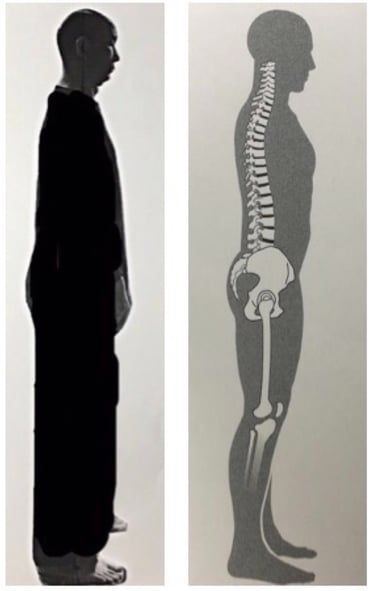
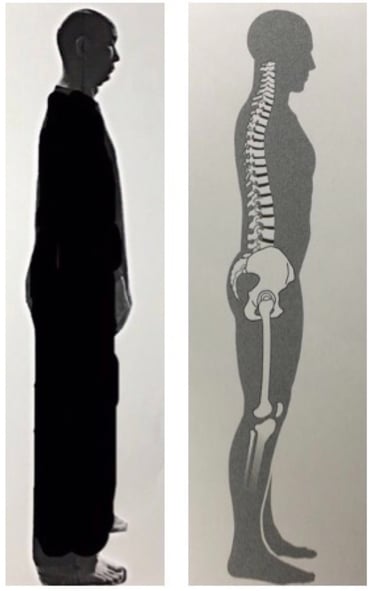
1. Stand with feet shoulder-width apart. The knees are aligned with the soles of the feet, and the inner sides of the feet are parallel, neither outward nor inward.
2. Sit on the hips and loosen the knees until the back of the calf is at a vertical angle to the ground. The thigh and calf bones are drawn into a straight line.
3. The body is upright and stable, the muscles and tendons are relaxed, and the weight of the body is focused on sinking. The spine should be placed in a natural state.
4. Slightly retract the lower jaw, relax the neck, lightly stick to the collar, and then put the head on the Baihui point to straighten the head and cervical spine; lick the upper palate with the tongue to facilitate the production of body fluid.
5. The chest should not be raised, but should be relaxed and reserved, and the back should follow the top of the head upwards, which will straighten the thoracic spine.
6. Relax the muscles around the lumbar spine, strengthen the abdomen, and move the Mingmen point backward to straighten the lumbar spine.
7. Put the tailbone in the middle of the pelvis so that it is flat and stable, not deviated from left to right, nor too curved forward and backward.
8. The shoulders should sink, the hands and elbows should relax and hang in front of the body, and the fingers should be stretched but not straightened. The underarms are slightly suspended to prevent the arms from pressing on the lungs.
9. Lower the weight of the whole body to the center of the feet (that is, the position of Yongquan point). At this time, it is imagined to use a thread to go straight down from the Baihui point on the top of the head, pass through the bottom of the pelvis, and then reach the middle point of the palms of both feet. This is the most upright state of the human body, and it is also the state where the body weight is most focused on the ground.
10. The Baihui acupoint on the top of the head is kept on the upper collar, the muscles and tendons of the whole body are relaxed, and the joints are relaxed to release the weight and sink. This will form the tension of pulling up and down, and gradually loosen the joints of the spine. When the lower plate is bearing the weight of the whole body, try to keep it as relaxed as possible, and don't use force to resist.
11. The eyelids can be drooped or closed to minimize interference from external objects, keep the inner peace and comfort. Always check the relaxation, uprightness and naturalness of the body. Try to keep your mind as calm as possible, and don't have too many messy and ups and downs of thoughts.
12. Keep the mouth slightly closed. Breath deeply and naturally through the nose. You can also just focus on this breath in your heart.
As long as one can persevere in this form, standing for half to an hour daily, practitioners will experience astonishing change. Pylon Meditation is neither mysterious nor difficult to learn, and is suitable for people of all ages and physical abilities. The key is persistency. As its name suggests, it evokes the idea of emulating the body like a large tree, with the trunk as the support and the feet as the roots, tapping into the inexhaustible energy of heaven and earth in the most natural way.
Important Note: While Zhan Zhuang has significant therapeutic potential, it should be used as a complementary practice, not a replacement for conventional medical treatment. It is crucial to learn the correct posture from a qualified instructor to avoid strain and to consult with a healthcare provider for specific medical conditions.
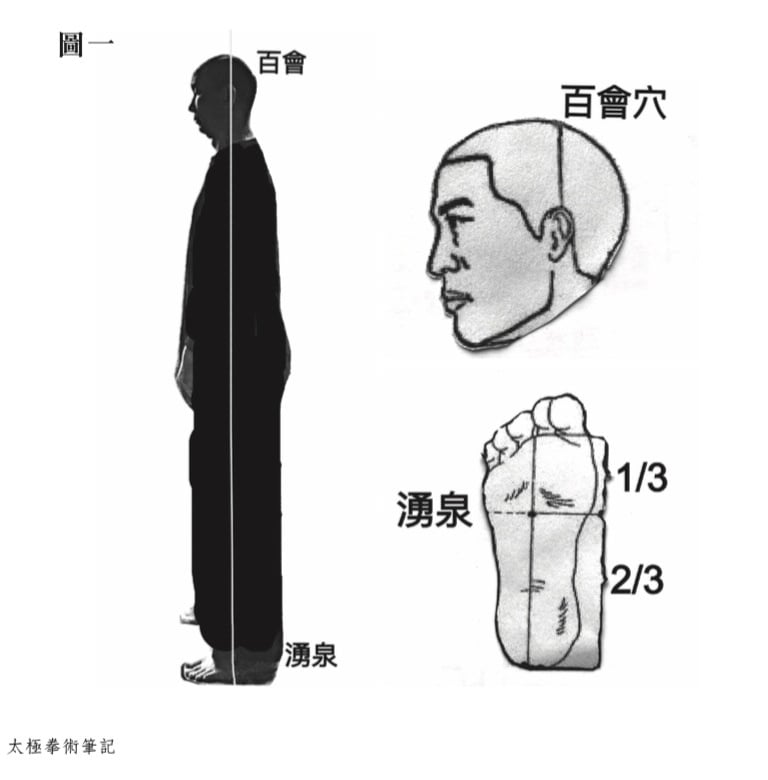
Baihui
Baihui
Yongquan
Yongquan
Connect
Reach out for your healing journey.
puifung.balance@gmail.com
+44 (0) 7438-712518
© 2026. All rights reserved.